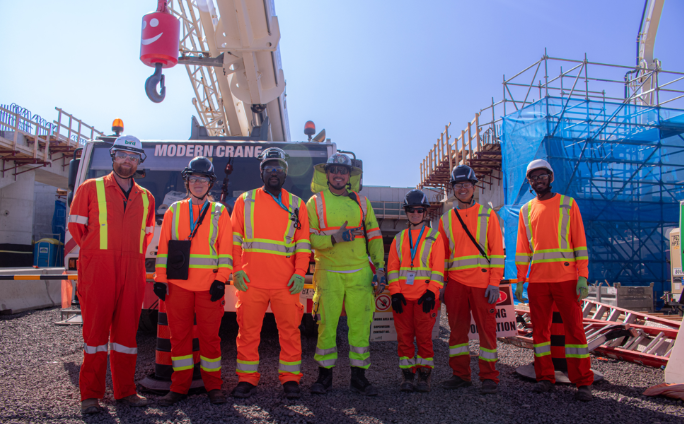
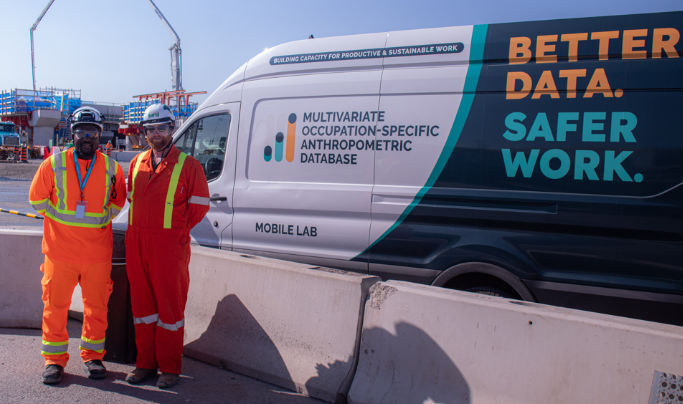
When Bird Construction agreed to participate in the DOSE initiative, it was about more than supporting research. It was about helping advance the construction industry’s understanding of the real-world demands and exposures placed on workers every day and using that knowledge to make workplaces safer.
Over four weeks, researchers from the Canadian Institute for Safety, Wellness & Performance (CISWP) partnered with Bird Construction teams at four distinct Ontario projects. Together, these projects provided an outstanding opportunity to capture data from a diverse range of work environments, helping build the evidence needed to improve injury prevention strategies across the construction sector.
About CISWP and DOSE
CISWP is an independent, not-for-profit applied research institute dedicated to improving workplace safety, wellness, and performance across Canada. Working directly with employers, workers, researchers, and industry partners, CISWP develops evidence-informed solutions that address real workplace challenges and support healthier, more productive workforces.
One of CISWP’s flagship initiatives is DOSE (Database of Occupation-Specific Exposures), a first-of-its-kind program that collects objective exposure data from workers in real workplace environments. Using advanced wearable sensors and mobile research technologies, DOSE measures physical, biomechanical, cognitive, psychological, and environmental demands across occupations. DOSE will help to generate better data to better understand workplace risks and ultimately prevent injuries before they occur. Through the DOSE initiative, CISWP researchers collect data at actual worksites, with actual workers, in actual work conditions. The DOSE initiative is funded by WSIB in partnership with WorkSafe Ontario Fund.
Four Very Different Job Sites
One of the strengths of the DOSE initiative is its ability to capture data across a variety of industries and project types. Bird’s four participating projects demonstrated just how diverse construction work can be.
At the Canadian Nuclear Laboratories/Port Hope Area Initiative project, researchers observed work taking place within a large-scale environmental remediation program, where planning, coordination, and specialized procedures are essential.
The Ontario Power Generation (OPG) Pickering project introduced a completely different working environment, where crews operate within a highly controlled energy-sector setting that demands precision and strict adherence to established processes.
The East Harbour Transit Hub showcased the scale and complexity of major transit infrastructure construction. Fast-paced urban construction activities, multiple trades, and constantly evolving work fronts created a unique environment for data collection.
Finally, at Bruce Power, researchers were able to observe work within one of Canada’s most sophisticated nuclear-sector projects, where technical expertise, specialized training, and rigorous safety requirements play a critical role in daily operations.
While each site required different skills, procedures, and approaches to work, they all shared one common feature: a strong commitment to worker health and safety.
From the Contractors Perspective
Hosting a research team on an active construction project is not a simple scheduling matter. The CISWP were excellent at answering all preliminary questions from sites to help the project teams prepare for their arrival. These questions ranged from logistics, production, to volunteer concerns about privacy. The quick and through responses were greatly appreciated and quelled any anticipation to having the research team on site.
A common note from all projects is that the research team came to site every day prepared to work in an active construction environment. This included providing all required training for the researchers, attending project orientation, and showing up every morning for the morning toolbox talk dressed in full PPE ready to go.
In the field the researcher team blended in seamlessly without interruption to site activities. They were quick to outfit volunteers in the morning and on hand to make any adjustments. This was hardly required as workers commented that the sensors applied were secure and non-disruptive, including when wearing tool belts and safety harnesses.
Site management on the projects gave overall positive reviews which led to quick approval from senior management for future collaboration opportunities.
Worker Participation Matters
The response from workers was overwhelmingly positive. Participation levels exceeded expectations, with many workers volunteering to participate and expressing interest in future data collection opportunities. Just as importantly, the CISWP research team was able to conduct its work while minimizing disruption to daily operations.
Bird plans to use the data provided by CISWP to enhance their PDAs and get an overall better understanding of physical exposures and stresses their workers are exposed to on a day-to-day basis.
The initiative has also been extremely popular with Bird clients and has been a value-creation item showcasing what Bird does differently from their competitors.
Better Data Creates Better Prevention
The DOSE initiative is building Canada’s first comprehensive database of occupation-specific exposures, creating an evidence base that can support injury prevention, workforce planning, accommodation strategies, return-to-work programs, and future health and safety policy development.
For construction employers, this means access to better information about the realities of work on site. For workers, it means a future where prevention strategies are increasingly informed by real-world evidence rather than assumptions.
Bird Construction is among a growing number of League of Champions (LOC) members that have stepped forward to support this important work. Their leadership demonstrates how industry partners can contribute to research while gaining valuable insights that help strengthen their own safety programs.
Get Involved
The success of these four weeks shows what is possible when industry, workers, and researchers collaborate toward a common goal. Bird Construction is already planning their next DOSE data collections with CISWP. Matt Fraser, Senior HSE Manager spearheaded this research collaboration at Bird Construction. He would be happy to share his experience with other League of Champions members.
The League of Champions has always championed innovation, leadership, and prevention. Participating in DOSE is another opportunity for members to lead by example and contribute to a growing body of evidence that will help make Canadian workplaces safer for generations to come.
If your organization is a League of Champions member and would like to participate in the DOSE initiative, CISWP wants to hear from you. By opening your worksite to research, you can help create better data, deeper insights, and safer work for everyone.
Connect with CISWP
Nicki Islic, Senior Director of Strategic Initiatives and Partnerships
nicki.islic@ciswp.ca
www.ciswp.ca
Better Data. Safer Work.